El Morro and San Cristóbal: One Ticket, Two Forts, and the One Most People Skip
Updated September 26, 2026 · 6 min read
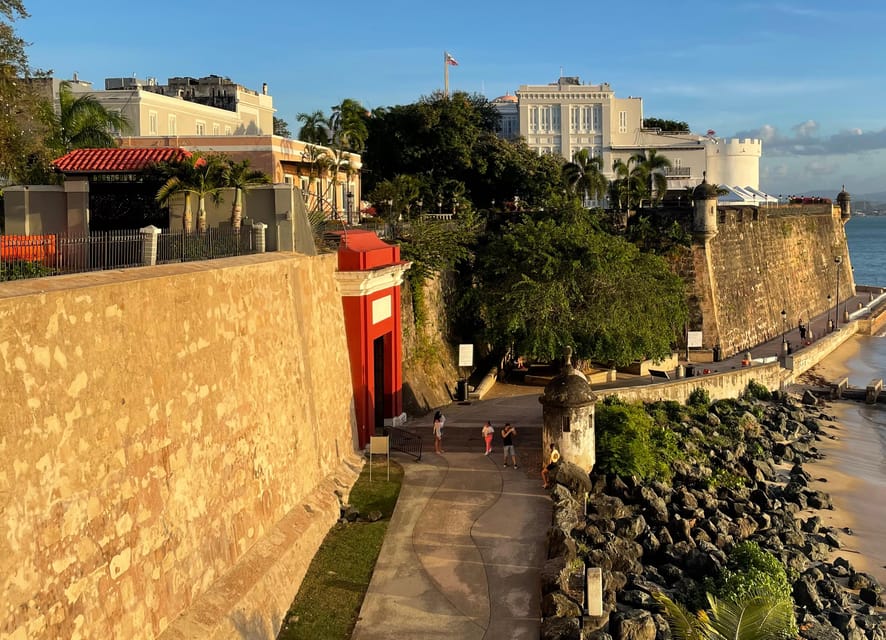
Two castles sit at either end of Old San Juan, about twenty minutes apart on foot. Most visitors go to one of them, photograph the lawn, and leave. They then discover at the airport that the second one was already paid for.
The National Park Service runs both as a single site, together with the city walls, the San Juan Gate and Fort San Juan de la Cruz across the bay. One fee, one receipt, two very different afternoons.
The ticket, and the part nobody reads
$10 per adult, valid 24 hours, valid at both forts. Not one each. The receipt you buy at El Morro at eleven in the morning gets you into San Cristóbal at four in the afternoon, or at ten the next morning if your feet have given up.
Everything else worth knowing about paying:
- Visitors aged 15 and under go in free. No ticket, no queue for one.
- The park does not take cash. Cards and contactless only, which catches out anyone who has just come from a cash-only cafetería two streets away.
- There is a site-specific annual pass for $35 that covers up to four adults for a year. For a family of four adults it costs less than a single day’s admission for all of them, and it is worth asking about at the window even on a short trip.
- The National Park Service has ten entrance-free days in 2026, among them Presidents Day, Memorial Day, the Independence Day weekend and Veterans Day. Since 2026, though, they apply only to U.S. residents. If you are travelling from Europe you pay the $10 on those days too.
Opening hours are 9 a.m. to 6 p.m., every day except Thanksgiving, Christmas Day and New Year’s Day. Those three closures are the only ones in the calendar, and they are worth checking against your travel dates rather than assuming a Caribbean island runs on Caribbean hours. It does not; it runs on federal ones.
El Morro, the one on every postcard
Castillo San Felipe del Morro stands on the headland where the bay meets the Atlantic, watching the harbour mouth. It is the fort in the photographs, it is the one the cruise passengers walk to, and it is the one with the great green field in front of it where families fly kites in the afternoon.
That field is the part people underestimate. It is outside the ticket line, it costs nothing, and on a windy Sunday it is the most purely local scene in the old town.
Inside, the fort goes down as much as it goes up, and the pleasure of it is the sightlines: every level was built so that guns could cover the water and the level below. Stand at the top and the geometry explains itself without a single sign.
San Cristóbal, the bigger one
Castillo San Cristóbal faces the other way. El Morro was built against ships; San Cristóbal was built against an army coming overland, and it is the largest fortification the Spanish built anywhere in the Americas, sprawling over some 27 acres at its full extent.
What makes it the more interesting visit, if you like the engineering:
- A deep dry moat and a system of tunnels, some for moving troops and supplies under cover, some dug specifically to blow up ground an attacker might be tunnelling through.
- Eleven casemates around the main plaza, the vaulted rooms where the garrison lived and worked.
- Five cisterns under the plaza holding roughly 800,000 gallons of rainwater. A fort under siege loses to thirst long before it loses to cannon, and this is the answer to that.
- Two coastal observation posts and a bunker from 1942. The Spanish built the place against sail, and the US Army was still using the same walls to watch for German submarines three and a half centuries later.
It is also, reliably, the emptier of the two. The piers are at the El Morro end of town, and the crowd tends not to walk this far.
If you only have time for one
Go to El Morro for the setting, San Cristóbal for the building. If you are travelling with someone who likes to understand how a thing worked, San Cristóbal will hold them for twice as long. If you want the view, the wind and the kites, El Morro wins and it is not close.
The walk between them along Calle Norzagaray takes about twenty minutes and is worth doing on foot rather than by taxi, because the sea wall is on your left the whole way.
Going with a guide
The walking tour with El Morro entry bundles the fort admission into a guided circuit of the old town, at €47.41 with 4.9 stars from 287 reviews. It saves you the ticket queue and, more usefully, gives you someone to ask why one fort faces the sea and the other faces the hills.
The history walking tour covers the Spanish and American periods in more depth without the entry included, and the certified-guide walking tour is a smaller-group alternative. All of them sit inside the 45 Old San Juan walking tours on this site, which start at €19.09.
If the hills are the problem rather than the history, the golf-cart tour covers the same ground seated. Both forts have long approaches on uneven ground, and the ramps inside are original Spanish ones built for cannon, not for wheels.
Practical
Do the forts early or late. The esplanades have no shade at all and the stone holds heat. Our guide to walking Old San Juan has more on the hours when the old town empties out.
Watch the January dates. During the Fiestas de la Calle San Sebastián, the park closes its grounds, including the El Morro esplanade and the north wall along Calle Norzagaray, overnight from 7 p.m. to 5 a.m. The forts themselves stay open on their normal daytime hours.
Bring water and a hat, not an umbrella. The wind off the headland will take it.
Afterwards, the 109 things to do in San Juan from €19.09 cover everything on land that is not a fort, and the 16 food tours from €39.16 start a few streets from the San Cristóbal gate.