The Best Time to Visit Puerto Rico: Four Windows, and Why December Is Not Automatically the Answer
Updated September 26, 2026 · 6 min read
Most guides answer this question with “December to April” and stop. That is the dry season, it is also the most crowded and most expensive stretch of the year, and for a lot of trips it is the wrong recommendation.
The useful version of the answer starts with a fact that surprises people: the temperature in San Juan barely changes. Daytime highs run from about 28 °C in January to 31 °C in August, with nights between roughly 22 and 25 °C. There is no cold season and no hot season, only a slightly hotter one. Nothing you would pack differs between February and July.
So the question is not “when is it warm”. It is when it rains, when storms are likely, and when everyone else is here.
Rain: less seasonal than you would think
San Juan gets roughly 1,520 mm of rain a year, and it is spread across every month. March is the driest at about 55 mm; November is the wettest at about 187 mm. That is a real difference, but it is a factor of three between the extremes, not the difference between a dry country and a wet one.
What that means in practice: it rains in the dry season too. Typically in short, heavy bursts in the afternoon rather than all day. A February trip is not a rain-free trip, it is a trip where the rain is shorter.
And El Yunque rains on its own schedule regardless. It is a rainforest, it sits in the path of the trade winds, and it is wet in February.
Hurricanes: the risk is real and it is concentrated
The Atlantic hurricane season runs 1 June to 30 November. That is six months, which is half the year, and treating the whole span as dangerous is the most common overcorrection people make.
The activity is not spread evenly across it. August, September and October carry the great majority of the risk, with September historically the peak. June and July sit inside the official season and are statistically much quieter than September.
Three things worth knowing rather than worrying about:
- NOAA publishes a seasonal outlook each May and updates it in August. That is the thing to read before booking a late-summer trip, not a travel blog’s general impression.
- A storm is forecast days ahead, not hours. The realistic disruption is a cancelled flight or a shut beach, not being caught out.
- Check what your booking allows. Tour cancellation terms and travel insurance matter far more in September than in February, and they cost the same to arrange in advance.
The four windows
December to April – the dry season. Least rain, lowest humidity, no storm risk, and every cruise ship in the Caribbean. Old San Juan is at its busiest, accommodation is at its most expensive, and the popular tours sell out days ahead rather than hours. If you want reliable weather and do not mind paying for it, this is your window.
May – the best value of the year. The crowds have gone, the storm season has not started, and rainfall is climbing but has not yet peaked. If someone asked us for one month, it would be this one.
June and July – warm, busy, low storm risk in practice. Statistically the quiet end of hurricane season. The catch is that this is the local and US-mainland summer holiday, so the beaches are full even if the hotels are cheaper than in February.
August to November – the cheapest, and the one that needs a plan. Prices drop for a reason. If you go, go with flexible bookings, and understand that September is the month the risk is concentrated in. Late November is a sweet spot with a catch: the storm season is ending, the Christmas crowds have not arrived, prices are still low — and November is the wettest month of the year.
Dates worth planning around
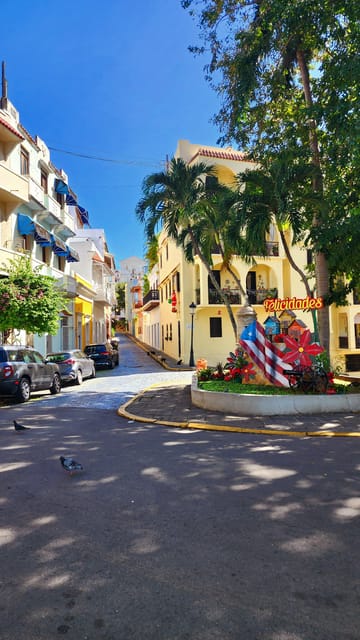
Fiestas de la Calle San Sebastián, known as SanSe, fills Old San Juan for four days in January – 21 to 24 January 2027. It is the biggest street festival in Puerto Rico and the unofficial end of a Christmas season that starts in late November and runs past Three Kings Day.
It is wonderful and it is not restful. Hundreds of thousands of people come, accommodation in the old town books out months ahead, and the National Park Service closes the El Morro esplanade and the north wall along Calle Norzagaray overnight, from 7 p.m. to 5 a.m., for the duration. The forts themselves stay open on their normal daytime hours. Come for it deliberately or avoid the week entirely; arriving by accident is the bad outcome.
Three Kings Day, 6 January, is a public holiday and a bigger family occasion here than 25 December. Expect closures.
Noche de San Juan, 23 June, is the city’s own night. At midnight people walk backwards into the sea and fall in, three times or seven or twelve depending on who taught them, to leave the past year in the water. The beaches fill up after dark and the whole coast turns into one long party. If your dates are flexible in June, aim at this.
What the season does to what you can book
Nothing here shuts for the winter, which is unusual for a beach destination. All 263 offers on this site run essentially year-round, and the 68 El Yunque tours from €31.61 are as available in October as in March.
Two things do move with the calendar:
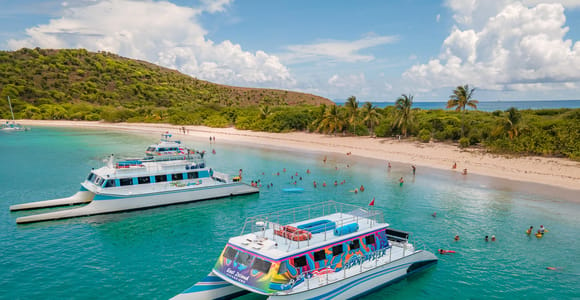
Sea conditions. The 16 island day trips from €50.04 and the 22 boat tours from €65.84 are the first to be cancelled when swell picks up, and the Atlantic side is rougher in winter than the summer weather suggests. Our Culebra guide covers what happens to a crossing on a rough day.
The moon, not the month. For the 14 bioluminescent bay tours from €50.04, the moon phase matters far more than the season. A dark night in August beats a full moon in February, and no amount of good weather fixes a bright sky. The bio bay guide explains how to read the calendar for it.
If you want one sentence
Go in May if you can choose freely, in late November if you want the same thing cheaper and will take the rain, and in February if reliable weather is worth paying for. Avoid September unless the price is the point, and if you go anyway, book things you can cancel.